Flexible Wires based on tungsten carbide

Description
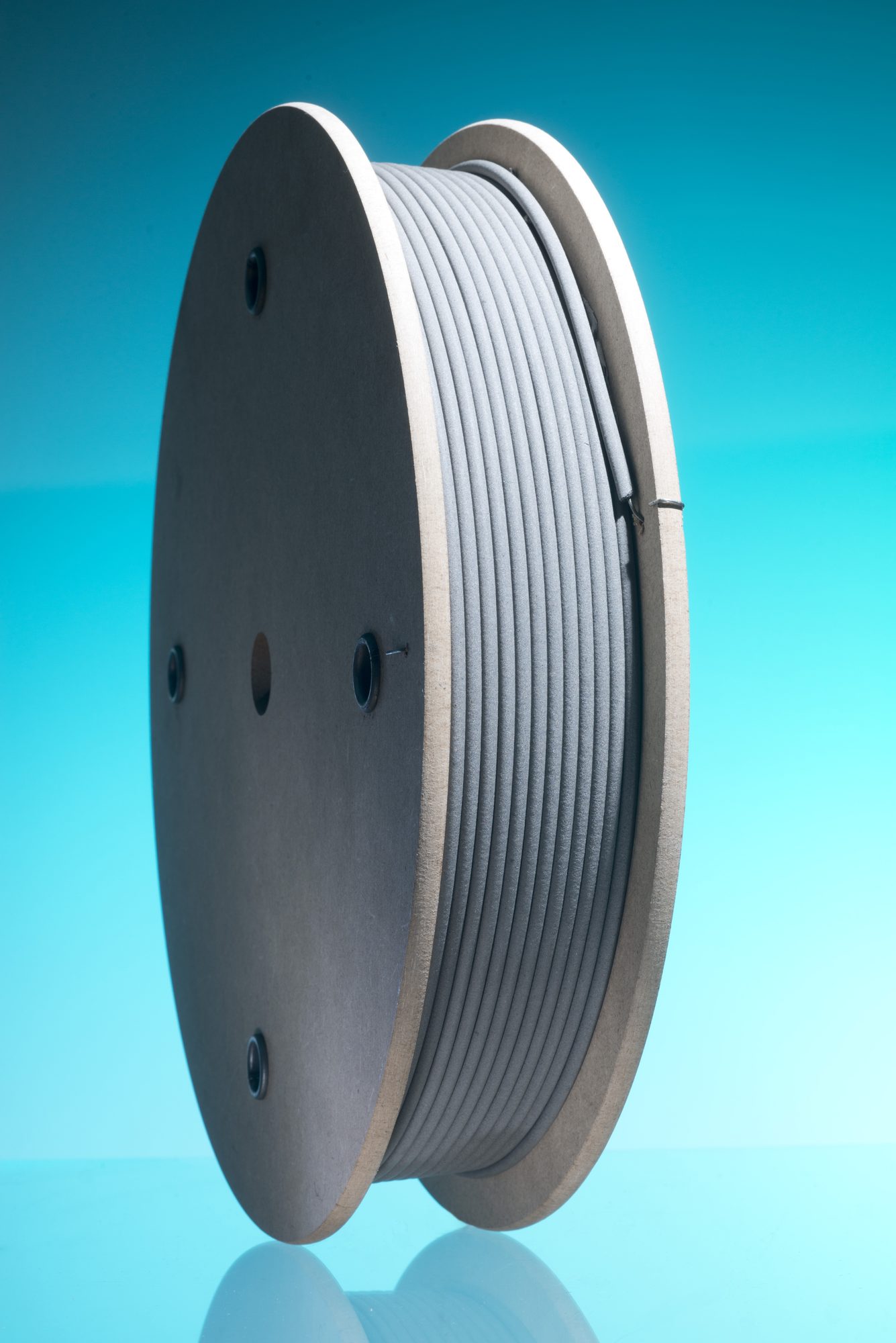
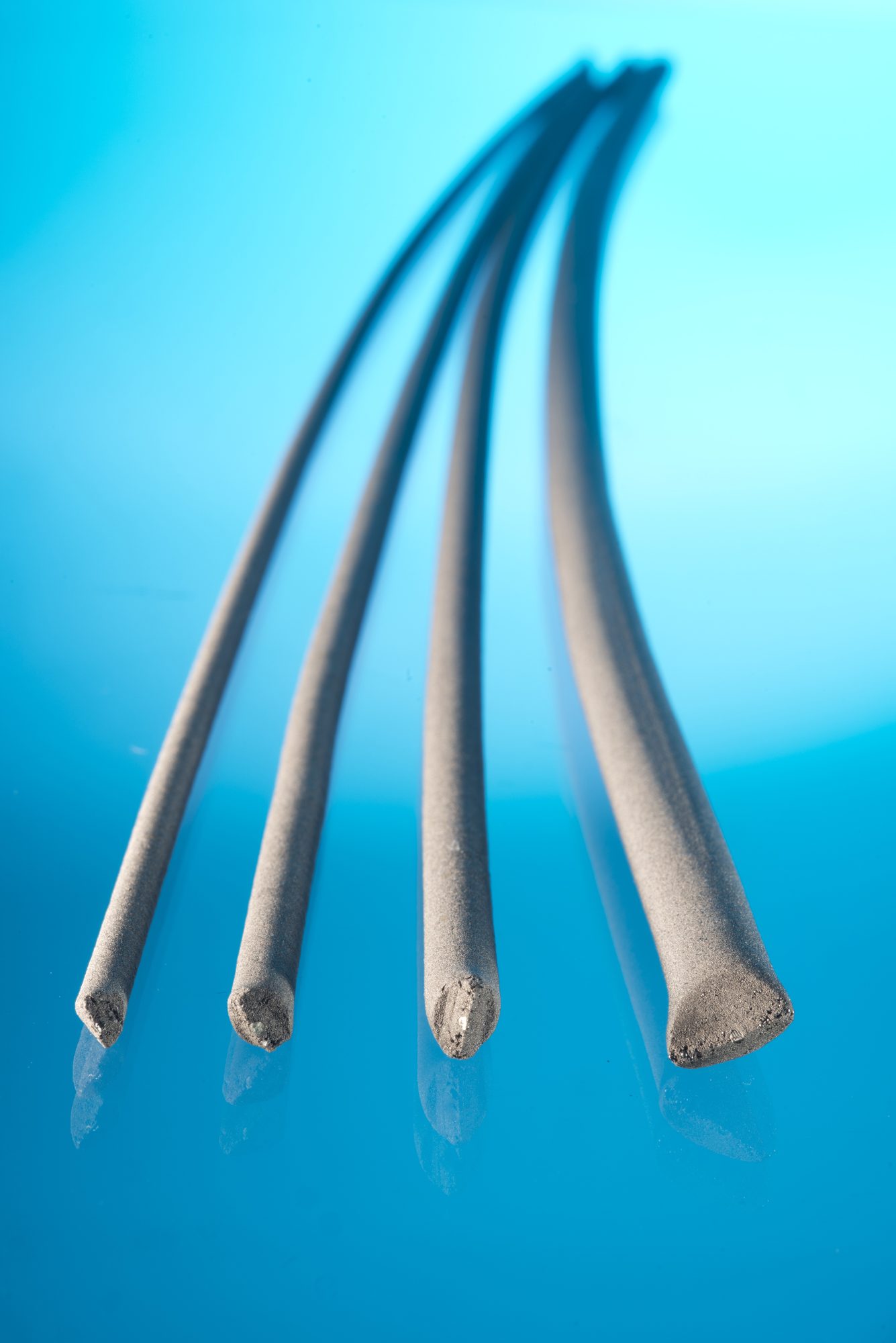
Flexible wires WFR 701 and WFR 702 are produced using an extrusion method. They consist of a core in the form of Ni wire and a thick sheath made from a mixture of crushed (WFR 701) or spherical (WFR 702) tungsten carbide grains of two CF types (coarse grains — primary, fine grains — additional) enclosed in a nickel matrix.
Welding is performed with an oxy-acetylene torch. The tungsten carbides do not melt, which protects the base material from overheating. Using the wire with other technologies (e.g. TIG) is not recommended.
Before application, the surface of the base material must be preheated to approximately 500°C. The uniform, dense distribution of tungsten carbide grains gives the deposited layer a very good wear resistance rating, comparable to PTA hardfacing technology.
Multi-layer coatings can be achieved, with hardness levels remaining consistent across the deposited layers. Since the wire contains a self-fluxing nickel alloy, using WFR 701 makes it possible to achieve a coating resistant to corrosion in various environments.
WFR 701 Wire Composition
| Component | Content | Grain Size |
|---|---|---|
| CF* (ziarno podstawowe) | 43% | 0,4–0,6 mm |
| CF (ziarno dodatkowe) | 20% | -125 +45 µm |
| Ni-alloy | 37% | -125 +20 µm |
lub, w wariancie o grubszym ziarnie: CF (ziarno podstawowe) 43% / 0,7–1,2 mm, CF (ziarno dodatkowe) 20% / -180 +63 µm, Ni-alloy 37% / -125 +20 µm.
* Fused Tungsten Carbide
Characteristics
| Component | Hardness | Melting temperature Ts (°C) | Density (g/cm³) |
|---|---|---|---|
| CF | HV0.1 2000–3000 | >2550 | 16,2 |
| Ni-alloy | HRc 40 | ~1100 | 8,2 |
Ni-alloy composition: Cr 7–9%; Fe 2–3%; Si 3–4%; B 1.5–1.8%; C 0.2–0.3%; Ni — balance.

Dimensions and Packaging
Ø 6 mm – available, 15 kg / spool.
Ø 4.5 mm and Ø 8 mm – made to order, 5 kg / 500 mm rods.
SULIQ.PL